Reading time: 3 min
Table of Contents
Key Takeaways
- Single-supplier lock-in is failing — Nvidia’s dominance created a single point of fragility. Companies are now designing custom chips to decouple from that risk.
- Custom silicon delivers production gains — Tuned hardware like OpenAI’s Jalapeño means fewer bottlenecks, lower latency, and predictable cost scaling.
- The shift mirrors infrastructure hardening — Just as VPS replaced shared hosting for reliability, custom chips replace off-the-shelf GPUs for AI inference at scale.
What Happens When Your Only Supplier Becomes a Bottleneck
Here’s what actually happens in production when you’re chained to a single GPU vendor: every design decision — pipeline depth, batch size, model parallelism — is constrained by that vendor’s roadmap. If they change the memory bandwidth or cut a tensor core, your carefully tuned workload becomes a liability.
Most people get this wrong. They think the problem is cost. The real cost is flexibility. Nvidia’s success created a monoculture, and monocultures crash hard. The demo worked. Production didn’t. Here’s why: your AI stack wasn’t built for portability, and now you’re locked into a pricing model that assumes no alternatives.
OpenAI’s Jalapeño: More Than a Chip
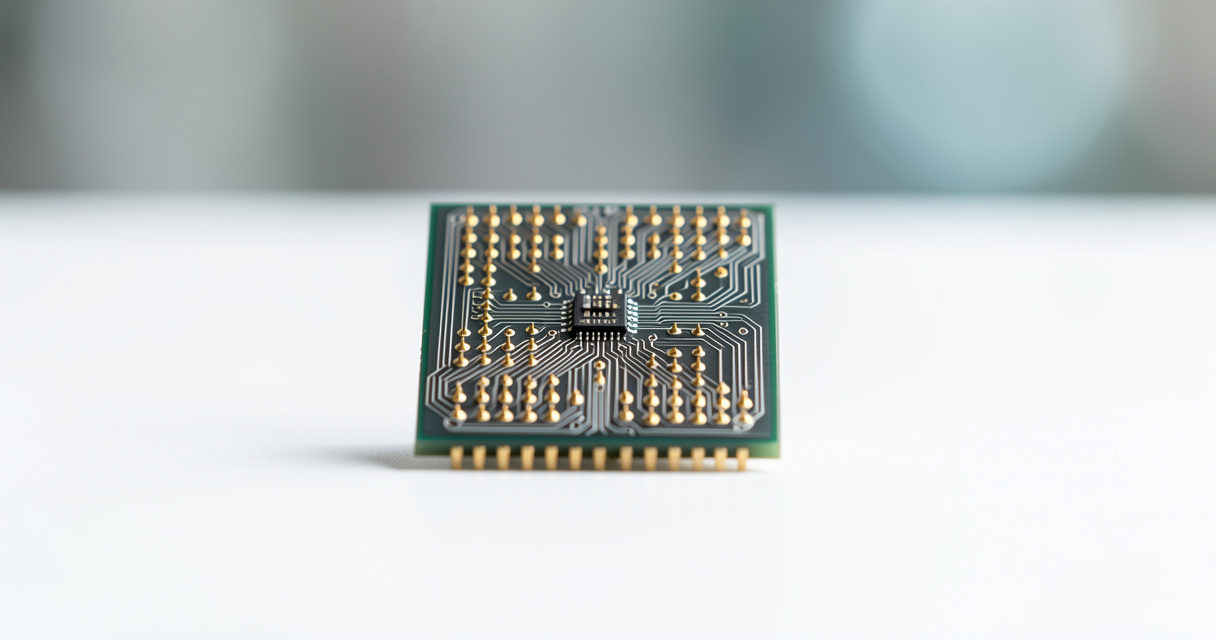
OpenAI just shared plans for Jalapeño, a custom inference chip built with Broadcom. I’ve seen this pattern before — not with AI chips, but with infrastructure decommoditization. When Apple ditched Intel, the performance gains weren’t theoretical. They were architectural. Custom silicon means controlling the instruction set, the memory hierarchy, and the thermal envelope. For inference workloads, that translates directly into lower latency and higher throughput.
This isn’t theory. Google has been doing it for years with TPUs. Apple’s M-series crushed Intel in power efficiency. SpaceX reportedly uses custom FPGAs for real-time controls. The common thread: when the off-the-shelf solution hits its limits, building your own yields hard-to-copy advantages. That’s not automation — that’s a competitive moat.
Why This Matters for Your Stack, Not Just Wall Street
If you’re running production AI workloads today, the chip decisions your infrastructure team makes in 2026 will affect your cost and reliability for the next three to five years. Relying on a single vendor is a systemic risk that manifests as sudden price hikes or allocation shortages. The recent memory market shocks proved that point.
What we built at Rebirth Distribution — OpenClaw and Hermes — is about exactly this kind of decoupling. We implemented agent orchestration layers that abstract away hardware dependencies, so if tomorrow your inference provider switches to a custom chip, your pipeline doesn’t break. That’s what production-grade means: the architecture survives supplier shifts.
Let me be specific. If you’re using n8n on a VPS, switching to a custom chip at the hardware level doesn’t matter if your workflow orchestration layer is portable. The real question is whether your Docker images and agent scripts reference specific GPU compute capabilities or abstract them into resource classes. Most automation stacks fail at this structural level because they assume hardware never changes.
Incremental Path: How to Prepare Without Rewriting Everything
Start small. Pick one inference-heavy workload and containerize it with a hardware abstraction layer. Use Docker environment variables to toggle GPU vendor or custom chip types. Test on a VPS with a different GPU. If it works, you’ve just de-risked a migration that would otherwise cost weeks of downtime.
We did this with a startup that was bleeding cash on Nvidia-only spot instances. By adding an abstraction layer through n8n and Hermes, they could fall back to an alternative provider within minutes — not days. The cost savings were 40%. The real value was the optionality. That’s not theory. That’s production.
The chip trend is real. OpenAI, Google, Apple, SpaceX — they’re not doing it for press. They’re doing it because off-the-shelf GPUs become a bottleneck at scale. Custom silicon will accelerate this year and next. Whether it’s Jalapeño or something else, the point is the same: build your infrastructure to treat hardware as a pluggable resource, not a permanent dependency.