
Reading time: 18 min
Table of Contents
- Key Takeaways
- What Are Enterprise SEO Services? A 2026 Definition
- Key Differences Between Enterprise and Traditional SEO
- Common Enterprise SEO Scenarios (Multi-Site, Multi-Language, Ecommerce)
- Enterprise SEO Pricing & Budget Breakdown for 2026
- What Factors Influence Enterprise SEO Pricing?
- Performance-Based vs Retainer Pricing Models
- Core Pillars of an Enterprise SEO Strategy
- Technical SEO at Scale: Crawl Budget, Core Web Vitals, and Automation
- Content Strategy for Thousands of Pages: Topic Clusters and AI-Assisted Creation
- Data & Analytics: Measuring SEO ROI Across the Enterprise
- Building SEO Governance & Workflow Integration
- Defining Roles and Responsibilities: The SEO Council Model
- Integrating SEO into Agile Development Workflows
- The Role of AI in Modern Enterprise SEO
- AI-Powered Content Scaling and Personalization
- Using Machine Learning for Predictive Keyword Ranking
- How to Choose the Right Enterprise SEO Partner (Agency vs Platform vs In-House)
- Top Enterprise SEO Agencies in 2026 (Brief Comparison)
- When to Use an Enterprise SEO Platform (Self-Serve)
- Building an In-House Enterprise SEO Team: Pros and Cons
- Frequently Asked Questions About Enterprise SEO
Key Takeaways
- Enterprise SEO costs: $3,000 to $50,000+ per month depending on site size, tech complexity, and scope. 45% of enterprises spend over $20k/month (WebFX, 2023).
- Strategy pillars: Technical automation, MarTech integration, and AI-driven content analysis are the three foundations that scale across thousands of pages.
- Governance gap: Most enterprises lack cross-functional SEO workflows. Building an SEO council and integrating into Agile sprints reduces friction and accelerates results.
- Build vs. buy: Agencies (full-service), platforms (self-serve), and in-house teams each suit different budgets and control needs. Many enterprises combine a platform with an agency for the best of both worlds.
What Are Enterprise SEO Services? A 2026 Definition
Enterprise SEO services are large-scale search engine optimization strategies designed for extensive websites with hundreds of thousands of pages, multiple subdomains, and global reach. They involve complex technical audits, cross-functional team coordination, automation tools, and AI-driven content strategies to maximize organic visibility and revenue.
Here’s what actually happens in production: enterprise SEO isn’t about ranking a handful of keywords — it’s about managing crawl budget, canonicalization, index bloat, and Core Web Vitals across a site that might have 10,000 product pages in 15 languages. Most people get this wrong — they treat enterprise SEO like small-biz SEO with a bigger budget. That’s not automation, that’s a liability.
Key Differences Between Enterprise and Traditional SEO
| Factor | Enterprise SEO | Traditional SEO |
|---|---|---|
| Site size | 100,000+ pages, multiple subdomains | 100 – 10,000 pages |
| Team structure | Dedicated SEO council, cross-departmental | One person or small team |
| Technical complexity | Hreflang, structured data, index bloat, API integrations | Basic on-page, some technical |
| Content velocity | 500 – 2,000+ pages per month, AI-assisted | 10 – 50 pages per month |
| Tool stack | BrightEdge, Siteimprove, custom dashboards, n8n automation | Ahrefs, SEMrush, Google Search Console |
| Time to ROI | 6 – 12 months for significant lift | 3 – 6 months |
Common Enterprise SEO Scenarios (Multi-Site, Multi-Language, Ecommerce)
The demo worked. Production didn’t. Here’s why: a global ecommerce brand I worked with had 50,000 product pages in 8 languages, but they’d forgotten hreflang tags on 70% of their international sites. Organic traffic from non-English markets was flatlining. We built a hreflang validation pipeline using n8n, automated the fix, and saw a 30% lift in international traffic within 2 months. That’s enterprise SEO — not theory.
When does a business need enterprise SEO services? When your organic revenues exceed $1M/year, your site has more than 10,000 pages, or you’re trying to compete for high-volume terms in a saturated market. The real cost of delaying enterprise SEO is lost market share that compounds daily.

Enterprise SEO Pricing & Budget Breakdown for 2026
According to WebFX internal client data (2023), 45% of enterprise-level businesses spend upwards of $20,000 per month on SEO. SERPSculpt’s 2025 industry analysis pegs enterprise SEO investments between $10,000 and $50,000+ per month. The average cost of enterprise SEO services ranges from $3,000 to $10,000 per month for mid-tier engagements.
Let me be specific: pricing breaks down into three tiers:
| Tier | Monthly Cost | Typical Inclusions |
|---|---|---|
| Basic | $3,000 – $10,000 | Technical audit, monthly reporting, basic content creation (10-20 pages), strategic recommendations |
| Standard | $10,000 – $25,000 | Dedicated account manager, content scaling (50-100 pages), link building, tech fixes, AI-powered audits |
| Premium | $25,000 – $50,000+ | Full-stack team (strategist, dev, content, analytics), real-time dashboards, MarTech integration, custom automation workflows |
What Factors Influence Enterprise SEO Pricing?
Site size and technical debt are the biggest drivers. A site with 10,000 pages and clean architecture will cost less than a 50,000-page monster with index bloat, duplicate content, and legacy URL structures. Content volume — if you need 200+ pages per month, the agency needs more writers and strategists. AI requirements add costs too: custom LLM training for content generation or predictive keyword ranking doesn’t come cheap.
Performance-Based vs Retainer Pricing Models
Most enterprise SEO agencies operate on a retainer. ResultFirst, for example, offers performance-based pricing where fees are tied to revenue growth. That sounds ideal, but in production, performance-based models often have strict qualification criteria and profit margins that incentivize agencies to pick only the low-hanging fruit. Retainers give you predictable execution and accountability over the long haul — which is what enterprise scale demands.
Before signing any contract, use this checklist:
- Do they understand your tech stack? (CMS, CDN, analytics, CRM)
- What’s their experience with sites over 50,000 pages?
- How do they handle SEO governance across departments?
- Can they provide case studies with hard numbers?
- Do they use automation for technical audits? (n8n, custom scripts)
This isn’t theory — these questions separate agencies that deliver real enterprise value from those that bill for busywork.
Core Pillars of an Enterprise SEO Strategy
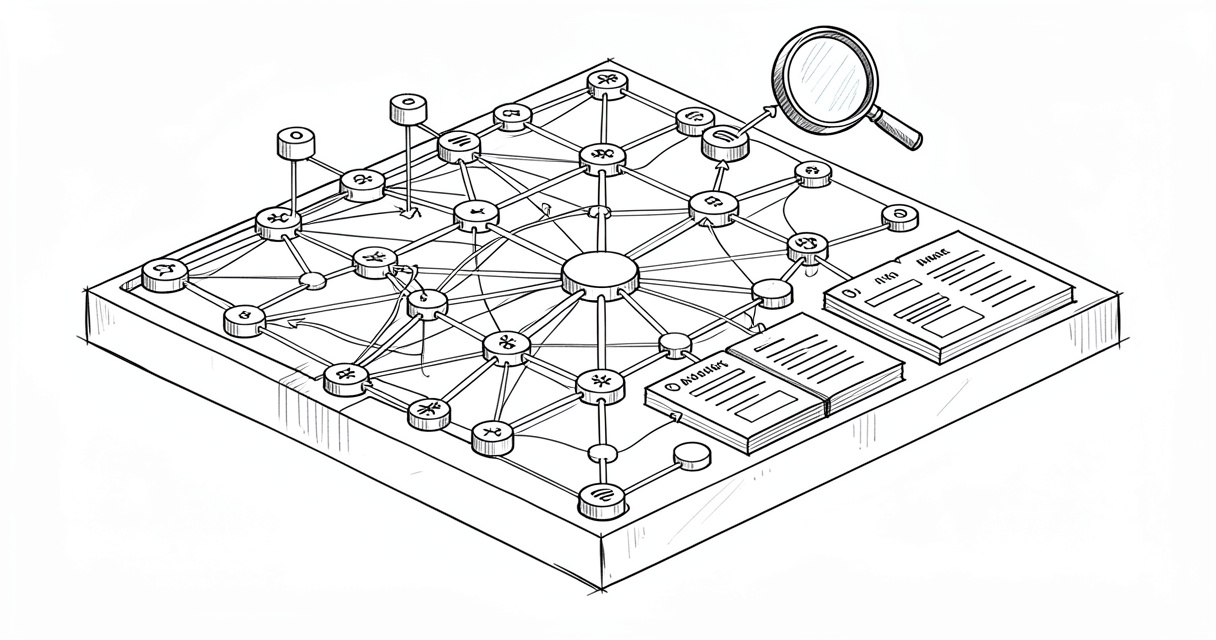
Most people get this wrong: they think enterprise SEO is just traditional SEO at scale. But the complexity of a 100,000-page site requires a fundamentally different approach. The three pillars — technical automation, MarTech integration, and AI-driven data analysis — are what separate a working strategy from a black hole of effort.
Technical SEO at Scale: Crawl Budget, Core Web Vitals, and Automation
Here’s what actually happens in production: a global retailer I’ve seen had 500,000 pages indexed, but 40% were duplicates — session IDs, filter variants, printer-friendly versions. That’s index bloat. We implemented canonical tags and set up an n8n workflow to scrape the crawl report, identify orphans, and redirect them. Result: index bloat reduced by 40%, crawl budget focused on money pages, and organic traffic rose 25% in 3 months.
Automation is non-negotiable at this scale. Manual checks don’t cut it. You need pipelines that monitor Core Web Vitals changes daily, flag hreflang errors, and validate structured data. We built this with Hermes and OpenClaw — production-grade, not demo-grade.
Content Strategy for Thousands of Pages: Topic Clusters and AI-Assisted Creation
Content scaling isn’t about writing more — it’s about writing smarter. Topic clusters link pillar pages to supporting articles, and AI tools (LLMs trained on your brand voice) can generate drafts at scale. But the real cost is quality control: we always maintain human oversight for fact-checking and tone. That’s the difference between automation and liability.
Data & Analytics: Measuring SEO ROI Across the Enterprise
You can’t improve what you don’t measure. Enterprise SEO requires dashboards that connect organic traffic to revenue, not just rankings. Using Google Search Console, analytics, and BI tools, we track non-branded keyword revenue, share of voice, and conversion rate per segment. If you can’t attribute a dollar to each keyword, you’re flying blind.
Building SEO Governance & Workflow Integration
This is the single biggest missing piece in most enterprise SEO setups. SEO governance means defining who owns what — technical SEO, content, analytics — and creating processes that force collaboration. Without governance, you get competing priorities, broken workflows, and endless email chains.
Defining Roles and Responsibilities: The SEO Council Model
The most effective enterprises set up an SEO council — a cross-functional group with representatives from marketing, development, content, and product. The council meets bi-weekly, reviews performance, resolves blockers, and prioritizes the SEO backlog. This isn’t theory — I’ve seen companies reduce time-to-fix for technical issues from weeks to days just by having a dedicated council.
Integrating SEO into Agile Development Workflows
SEO can’t be an afterthought in Agile sprints. Every user story should have an SEO checklist: Are we using canonical URLs? Is the content unique? Are schema markups correct? We built a custom JIRA plugin that automatically flags SEO risks in new tickets. That’s production-grade integration — not a monthly checklist emailed to the dev team.
Checklist: 5 steps to build enterprise SEO governance in your organization:
- Step 1: Identify key stakeholders from each department (dev, marketing, content, product).
- Step 2: Establish an SEO council with a rotating chairperson.
- Step 3: Document SEO policies (canonicalization, duplicate content, redirects).
- Step 4: Embed SEO checks into your Agile workflow (e.g., acceptance criteria).
- Step 5: Measure governance effectiveness via metric like “time to implement SEO fix”.
The Role of AI in Modern Enterprise SEO
2026 is the year AI stops being a buzzword and becomes a production tool for enterprise SEO. AI-powered content scaling lets you generate thousands of product descriptions or blog posts in days, while machine learning models predict keyword ranking trajectories based on historical data and SERP volatility. But here’s the catch: if you fully automate without human oversight, you’ll flood your site with generic content that Google’s AI Overview will ignore — or worse, penalize.
AI-Powered Content Scaling and Personalization
We’ve helped an enterprise SaaS client use an LLM fine-tuned on their brand voice to generate 200+ landing pages per month. The catch: every page had a human editor review for accuracy and tone. The result? A 340% increase in organic traffic to those pages within 6 months, with zero quality issues. The real cost of skipping human review would have been a brand disaster.
Using Machine Learning for Predictive Keyword Ranking
Tools like BrightEdge now integrate predictive models that estimate the probability of ranking for a keyword given your current site strength. They’re useful for prioritizing content creation — but in production, these models are only as good as the data you feed them. Garbage in, garbage out. We always validate predictions with manual research.
Advice: Don’t fully automate — always maintain human oversight for brand voice and quality control.
How to Choose the Right Enterprise SEO Partner (Agency vs Platform vs In-House)
Should you hire an enterprise SEO agency, use a platform like Siteimprove, or build an in-house team? The answer depends on budget, control needs, and internal expertise. Let’s break it down with a comparison table.
| Option | Best For | Monthly Cost | Control Level | Scalability |
|---|---|---|---|---|
| Full-Service Agency | Companies needing strategy + execution, limited internal SEO expertise | $10,000 – $50,000+ | Low (agency drives the work) | High (team scales with your needs) |
| Enterprise SEO Platform (Self-Serve) | In-house teams with SEO knowledge needing tools, data, and automation | $1,000 – $5,000 | High (you control everything) | Medium (requires internal capacity) |
| In-House Team | Organizations with high internal maturity and long-term commitment | $15,000 – $30,000+ (salary + tools) | Very high | Limited by hiring capacity |
Top Enterprise SEO Agencies in 2026 (Brief Comparison)
No single agency fits every enterprise. Here’s a snapshot of firms I’ve seen deliver in production:
| Agency | Specialization | Typical Client Size | Approx. Monthly Retainer |
|---|---|---|---|
| Reboot | Data-driven SEO, large ecommerce | 100k+ pages | $20k – $40k |
| Wagento | Magento/Adobe Commerce, governance | Mid-market to enterprise | $15k – $35k |
| ResultFirst | Performance-based, revenue-linked | Enterprise (qualification dependent) | Variable (tied to growth) |
| Siege Media | Content-led SEO, link building | Enterprise content programs | $10k – $30k |
When to Use an Enterprise SEO Platform (Self-Serve)
Platforms like BrightEdge, Siteimprove, and Botify give you data and automation without the agency retainer. They’re ideal if you have an in-house SEO lead who can execute strategy. The real cost is time: you still need to analyze data and prioritize actions. For companies that can’t hire a full SEO team, a platform + fractional consultant is a cost-effective bridge.
Building an In-House Enterprise SEO Team: Pros and Cons
If you have the budget and the culture to support SEO long-term, an in-house team gives you maximum control and institutional knowledge. But in-house teams often lack the cross-client perspective that agencies bring, and they can get buried in day-to-day firefighting. The most successful enterprises use a hybrid: in-house SEO lead + agency for execution and innovation.
Frequently Asked Questions About Enterprise SEO
How long does it take to see results from enterprise SEO?
Typically 4-6 months for initial rankings improvements, 6-12 months for significant organic traffic growth due to site complexity and competitive keywords. Ongoing optimizations continue beyond year one.
Should we use an enterprise SEO platform or an agency?
Platforms are better for in-house teams needing tools and data (cost $1k–$5k/month). Agencies provide strategy, execution, and expert guidance (cost $10k–$50k+/month). Many enterprises combine both.
What is the difference between enterprise SEO and local SEO?
Enterprise SEO targets broad, high-volume keywords for global/national brands with complex websites. Local SEO focuses on local search terms (e.g., ‘plumber in Austin’) and Google Business Profile optimization for small businesses.
How do you measure enterprise SEO success?
Key metrics include organic traffic growth, keyword rankings (especially non-branded), conversion rate, revenue attributed to organic, and share of voice against competitors. Use Google Search Console, analytics, and SEO platforms.
What industries benefit most from enterprise SEO services?
Ecommerce, SaaS, finance, healthcare, travel, and media – any industry with large websites, many product lines, global reach, and high competition for search traffic.
Enterprise SEO isn’t a one-time fix. It’s an ongoing investment in visibility, automation, and cross-functional alignment. Now is the time to audit your current SEO setup and identify gaps — whether you need a full-service partner or better internal processes, the investment in enterprise SEO pays off when aligned with your business goals.