Lecture time: 4 min
Table of Contents
Key Takeaways
- Tent infrastructure: Meta has deployed six massive weatherproof tents in Ohio to house billions in AI chips, cutting construction time in half but introducing environmental and reliability risks.
- Off-grid power: The site uses 200 MW of modular gas turbines, a tactic from xAI, reducing dependency on grid power but increasing operational complexity and failure points.
- Cost vs. stability: While tents reduce upfront capital expenditure, they create a fragile foundation for AI workloads that demand consistent cooling, power, and uptime.
Here’s what happens in production when speed becomes the only metric: you build data centers in tents.
The Tents Are Not a Gimmick
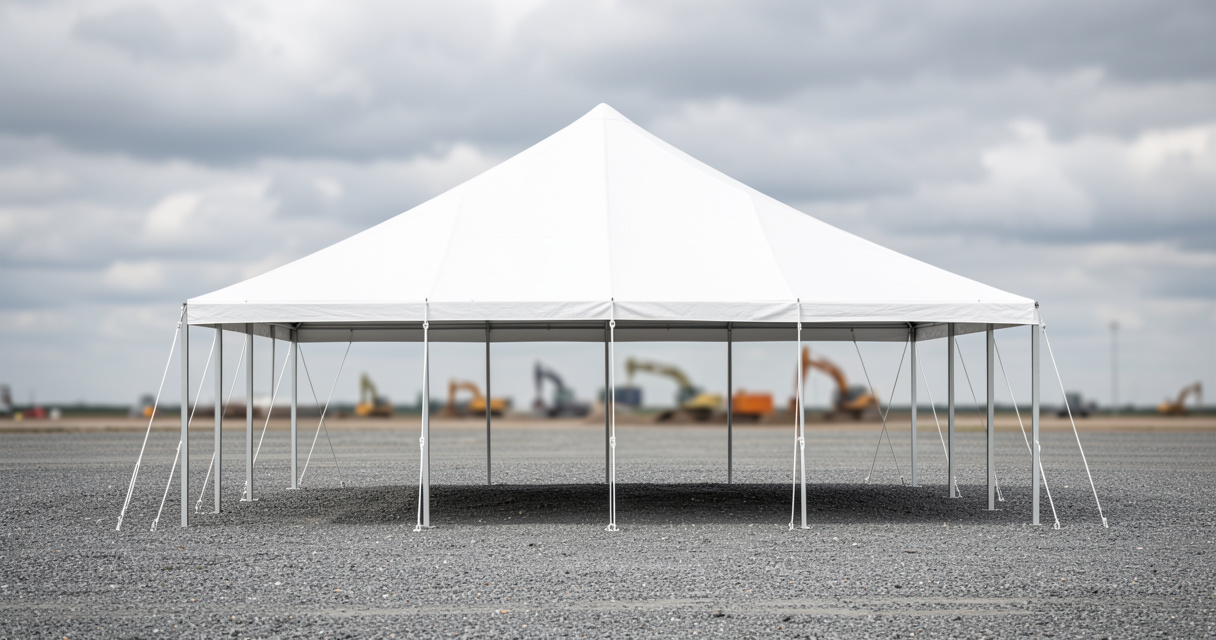
Meta has built six structures outside New Albany, Ohio — each 125,000 square feet — using what they call “rapid deployment structures.” These are weatherproof tents, not permanent buildings. The goal is to cut construction time from years to months. This isn’t theory. Satellite images confirm all five tents built between April and June 2026 are standing. AI chips worth billions now sit under fabric walls.
Most people get this wrong: tents are not a cheap hack. Let me be specific. The real cost is the operational complexity that comes with non-standard infrastructure. Cooling, humidity control, physical security — these are harder to maintain in a tent than in a concrete shell. The demo worked. Production didn’t? Not yet, but the failure modes are predictable.
Power Without a Grid
The site runs on 200 megawatts of modular gas turbines — a move straight out of xAI’s playbook. That’s not automation — that’s a liability. Off-grid power gives you independence but introduces single points of failure: fuel supply chains, turbine maintenance, no grid fallback. In production, this means any outage becomes a full-site outage. There’s no graceful degradation.
I’ve seen teams spend months building automation stacks that rely on cloud availability zones, only to realize the physical infrastructure underneath isn’t redundant. Meta’s approach mirrors that mistake at a larger scale. The architecture first lesson here: if your power is fragile, your automation is fragile.
Cost Framing That Matters
Meta plans to spend up to $145 billion on data centers and other capital expenditures. Wall Street isn’t impressed — stock is down 5% this year. Tents are an attempt to trim the bill. But the business term for this is technical debt. Temporary infrastructure that becomes permanent, with maintenance costs that compound.
For startups watching this: incremental paths matter. You don’t need tents. You need automation that holds. Build your n8n workflows, deploy on VPS with proper Docker isolation, use OpenClaw for agent orchestration where the orchestration layer is production-grade, not demo-grade. That’s what I built at Rebirth Distribution. That’s what works.
The Real Infrastructure Failure Pattern
This isn’t theory. The pattern is predictable: a company prioritizes speed of deployment over structural reliability, encounters unforeseen operational costs, then scrambles to retrofit stability. I’ve seen it with CI/CD pipelines, with Kubernetes clusters, and now with data centers. The costs are always higher after the fact.
Tents may work for AI inference workloads that tolerate some downtime. But if you’re running production systems that need 99.9% uptime — and most startups do — then fragile infrastructure is a liability you can’t afford.
That’s not automation — that’s a gamble.